

.jpg?width=1919&height=1081&name=Media%20(9).jpg)
Site Preparation
Modular Home Planning
Modular Homes Ontario

Commercial modular buildings are changing the way projects are delivered across Canada. As developers face increasing labour shortages, rising material costs, and tighter construction schedules, modular construction offers a practical solution that delivers faster occupancy, predictable budgets, and exceptional quality. Rather than simply building faster, today's modular construction is helping organizations build smarter while reducing many of the risks associated with conventional construction. Commercial modular buildings are reshaping project timelines, budgets, and quality standards across Canada's construction landscape—delivering faster returns and predictable outcomes when traditional methods fall short.
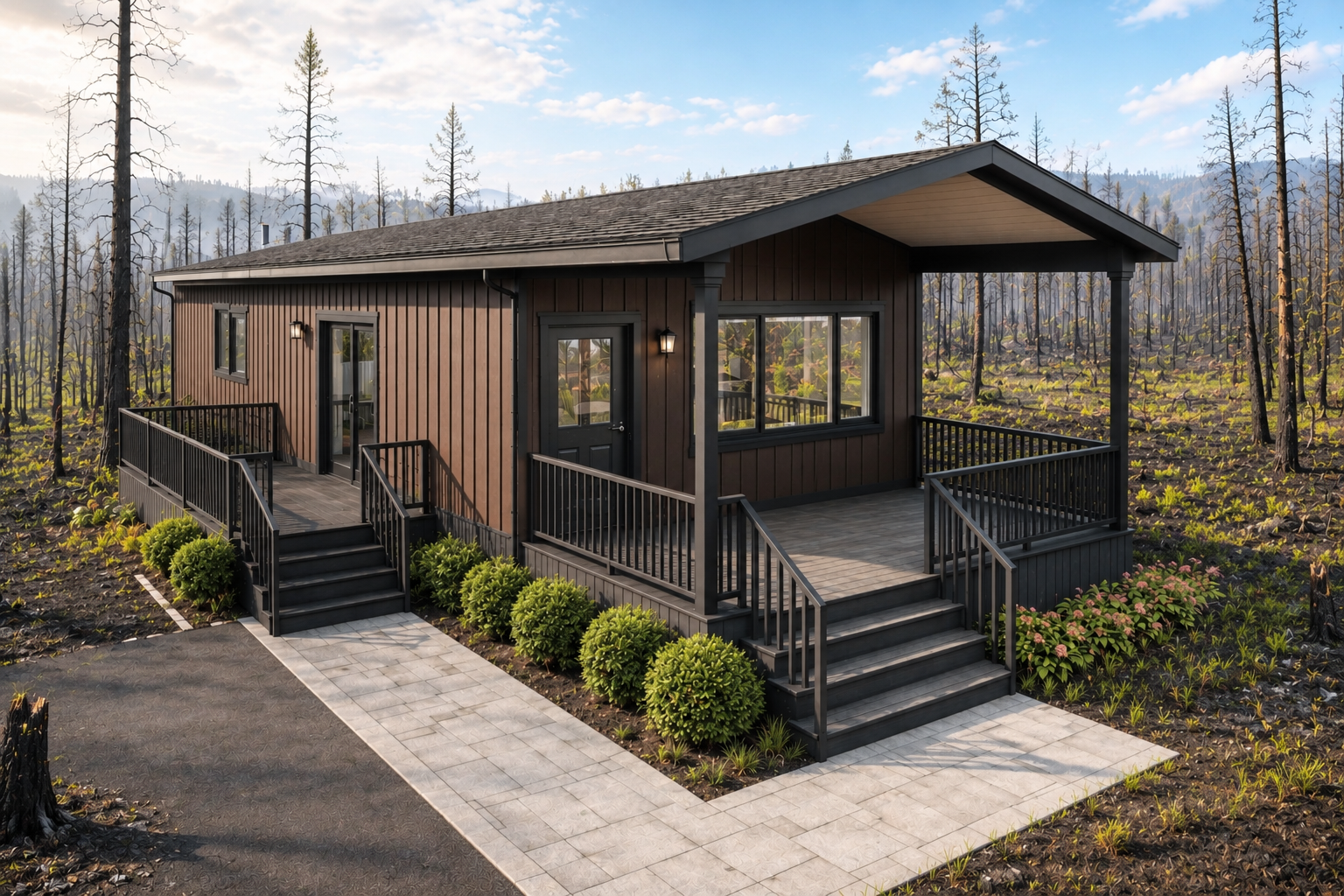
For years, modular construction was often associated with portable classrooms, temporary offices, or small residential buildings. Today's commercial modular buildings have moved far beyond those outdated perceptions. Modular is not a building type, it's a construction method capable of delivering everything from healthcare facilities and police stations to multi-residential developments, workforce accommodations, commercial offices, and retail spaces.
The construction industry has changed dramatically. Skilled labour shortages, supply chain disruptions, unpredictable weather, and escalating costs have made traditional construction schedules increasingly difficult to maintain. Every unexpected delay adds pressure to project budgets while postponing occupancy, revenue generation, and operational readiness.
Modern businesses need facilities completed on predictable schedules without sacrificing quality or performance. Modular construction answers that challenge by relocating much of the construction process into a controlled manufacturing environment, allowing projects to advance more efficiently while reducing delays and uncertainty.
Rather than relying on sequential on-site construction, modular buildings are carefully engineered, manufactured, transported, and assembled using proven production processes that help keep projects moving regardless of external conditions.
One of the greatest advantages of commercial modular construction is the level of quality control that comes from manufacturing buildings indoors. Instead of crews working through changing weather conditions, every stage of construction takes place inside a temperature- and humidity-controlled facility where materials remain protected from moisture and environmental damage.
At Smart Modular Canada (SMC), each project progresses through a carefully coordinated production sequence. Framers, electricians, plumbers, HVAC technicians, cabinetmakers, drywall installers, and finish carpenters complete their work in organized stages rather than competing for space on an active construction site. This streamlined workflow improves efficiency while maintaining consistent quality throughout the build.
The company has further strengthened its manufacturing process by bringing many critical operations in-house. Roof and floor trusses are engineered and manufactured internally, while a dedicated cabinetry department produces kitchens and custom millwork from raw materials using CNC machining, automated edge banding equipment, and precision assembly systems. Finished cabinetry is installed directly into each module before it leaves the factory, reducing installation time on-site and ensuring a precise fit.
Automation throughout the production facility also improves framing accuracy, reduces material waste, and increases consistency from one project to the next. By controlling more of the manufacturing process under one roof, Smart Modular Canada minimizes dependence on outside suppliers while maintaining greater control over production schedules, quality standards, and overall project delivery.
For commercial developers, time directly impacts profitability. Every week a project finishes sooner allows owners to begin generating revenue, serving customers, or housing employees earlier than would be possible with traditional construction.
Modular construction accelerates project schedules by allowing multiple phases of construction to happen simultaneously. While site crews prepare foundations and utility connections, building modules are being manufactured inside the factory. Instead of waiting for one phase to finish before beginning the next, both progress together, significantly shortening the overall project timeline.
This parallel construction process provides substantial advantages for hotels, healthcare facilities, retail developments, workforce accommodations, educational buildings, and commercial offices where earlier occupancy creates immediate financial returns.
Another significant benefit is the elimination of most weather-related delays. Harsh winters, heavy rain, and seasonal interruptions can dramatically slow conventional construction projects, particularly across Northern Ontario. Because modular buildings are manufactured indoors, production continues year-round without interruption, providing far greater schedule certainty.
Modules leave the factory substantially complete, including mechanical systems, electrical, plumbing, cabinetry, flooring, interior finishes, and exterior components. This high level of completion reduces on-site construction time, improves cost predictability, and allows developers to plan financing, staffing, and operations with greater confidence while delivering projects on time and within budget.
Remote construction presents unique logistical challenges. Coordinating multiple trades, transporting materials, and managing extended construction schedules can significantly increase both cost and complexity.
Modular construction simplifies these challenges by completing the majority of construction before the building ever reaches the site. Fully finished modules are delivered ready for installation, dramatically reducing the amount of labour required in remote locations.
Smart Modular Canada's manufacturing facility in Thunder Bay is strategically positioned to serve Northwestern Ontario, Northern Ontario, and Eastern Manitoba, including many Indigenous and remote communities. Where seasonal access is required, modules can be transported using winter ice roads, allowing projects to reach locations that would otherwise be difficult to build using conventional methods.
This approach is particularly valuable for mining operations, infrastructure projects, energy developments, and industrial camps requiring workforce housing, mobile offices, kitchens, dining facilities, laundry buildings, recreation spaces, warehouses, and other support infrastructure.
Buildings are designed to perform in Canada's demanding climate, incorporating high-performance insulation values—including R-60 roofs, R-24 walls, and R-40 floors—to maximize energy efficiency and occupant comfort. Every project is constructed to meet Ontario Building Code and CSA requirements while maintaining the same high level of quality regardless of its final destination.
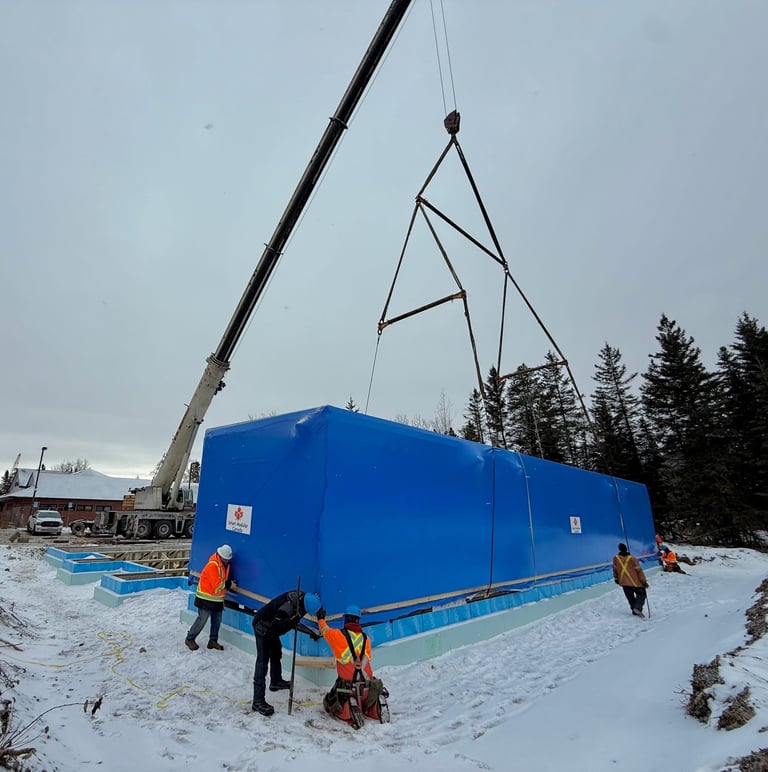
Because site preparation can occur while manufacturing is underway, foundations and utility services are ready when the modules arrive. Installation is often completed within days rather than months, reducing site disruption, lowering accommodation costs for construction crews, and allowing facilities to become operational much sooner.
Like any successful construction project, modular construction begins with careful planning. Early coordination of site conditions, utility connections, foundation design, transportation logistics, and permitting helps ensure projects proceed smoothly from design through installation.
Proper planning starts with understanding the site itself. Foundation options, including full basements, walk-out basements, crawl spaces, screw piles, partial foundations, or cribbing where appropriate, can be selected to suit local conditions, building requirements, and project budgets.
Equally important is ensuring utility services are accurately located and coordinated according to building specifications before installation begins. Working with experienced professionals early in the planning process helps identify potential issues before they affect schedules or costs.
Delivery requirements may vary depending on project location, site access, terrain, and foundation selection. Close collaboration between municipal authorities, utility providers, site contractors, and the modular manufacturer helps ensure every phase of the project remains aligned.
Smart Modular Canada manages the entire process. From design and engineering through manufacturing, transportation, and installation, SMC provides clients with a single point of accountability throughout the project. This integrated approach simplifies communication, reduces coordination challenges, and provides long-term support well beyond project completion.
Whether developing commercial retail space, healthcare facilities, institutional buildings, workforce accommodations, or remote industrial infrastructure, commercial modular construction offers a reliable alternative to traditional building methods. By combining factory-controlled quality, faster construction schedules, predictable costs, and comprehensive project management, modular buildings provide the speed, durability, and long-term value today's commercial developments demand.